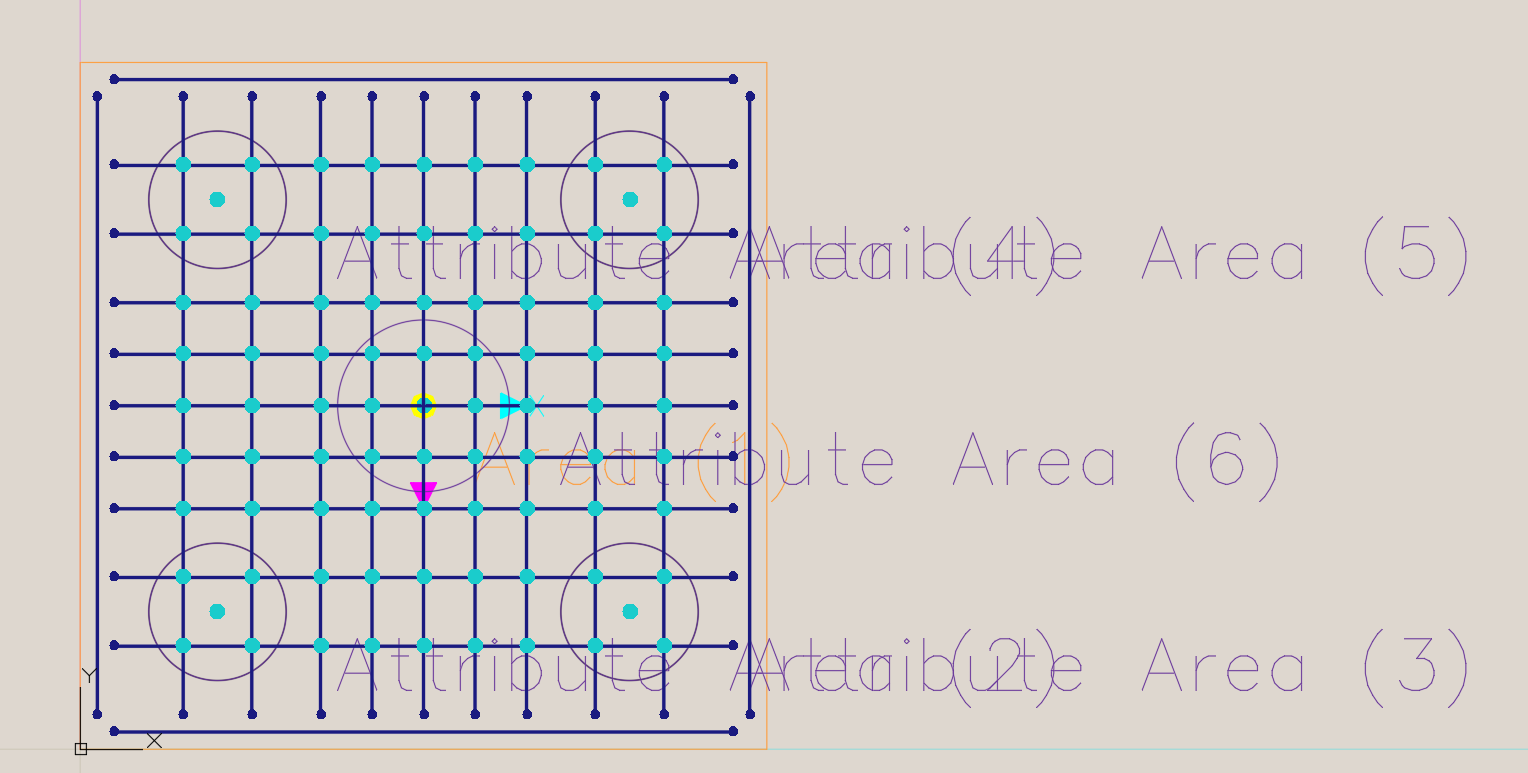
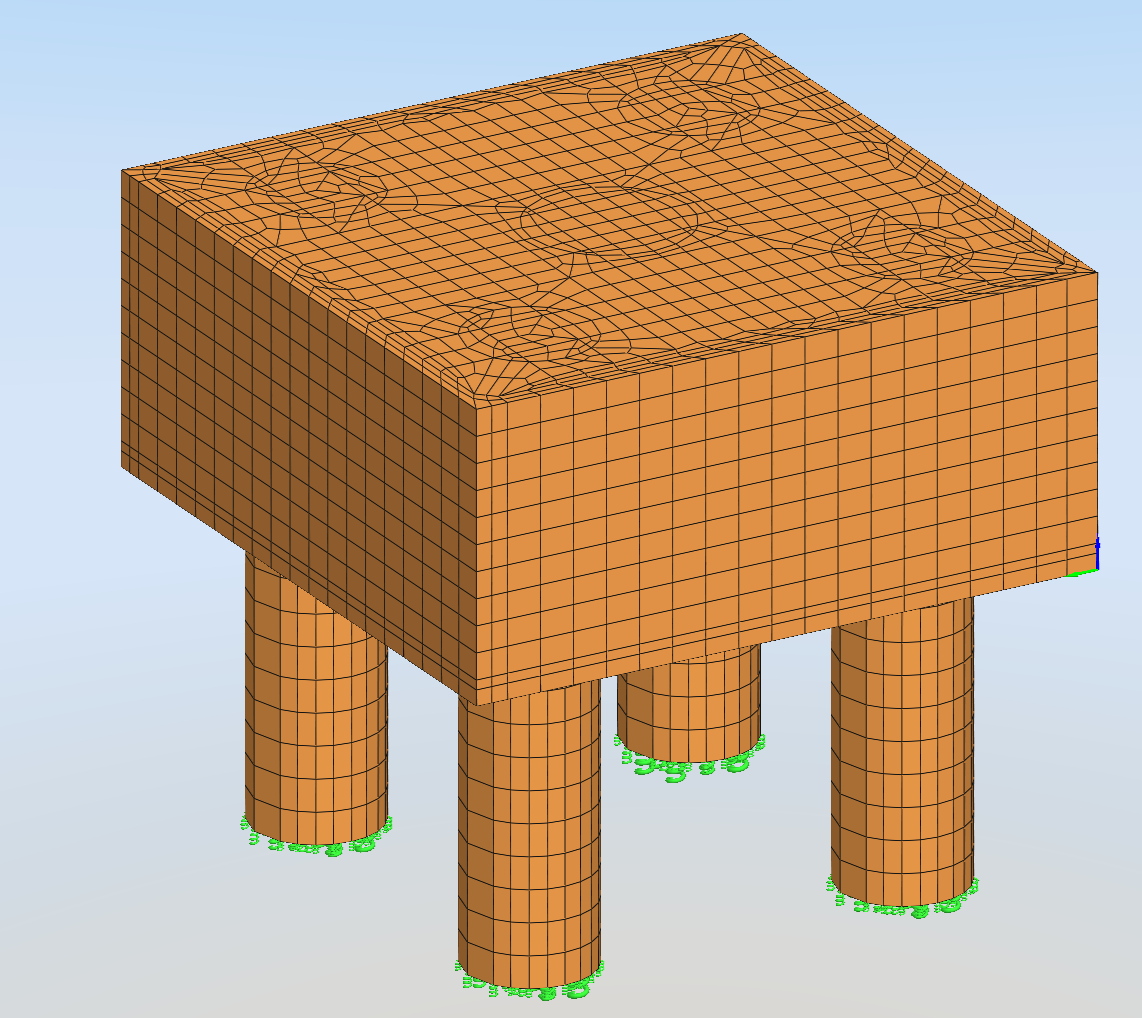
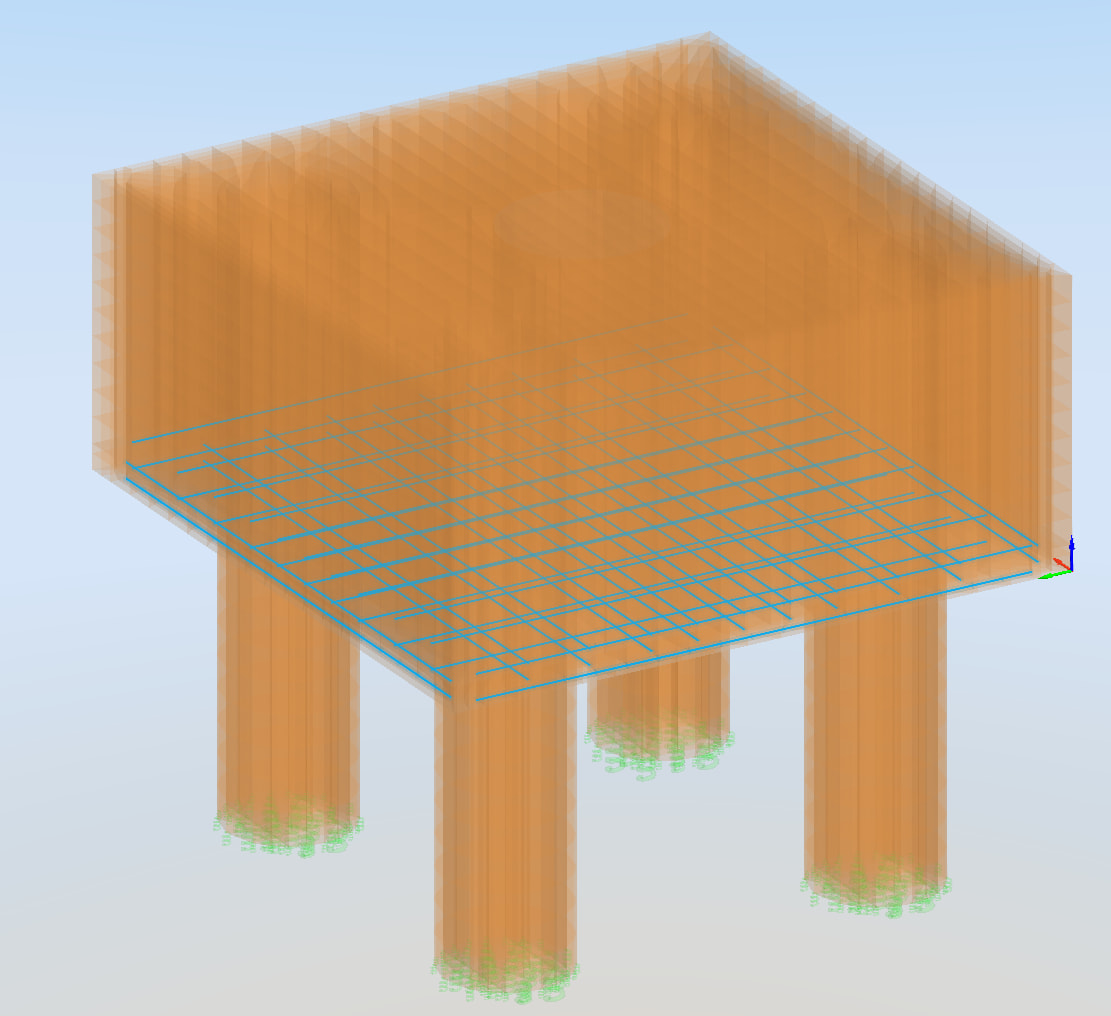
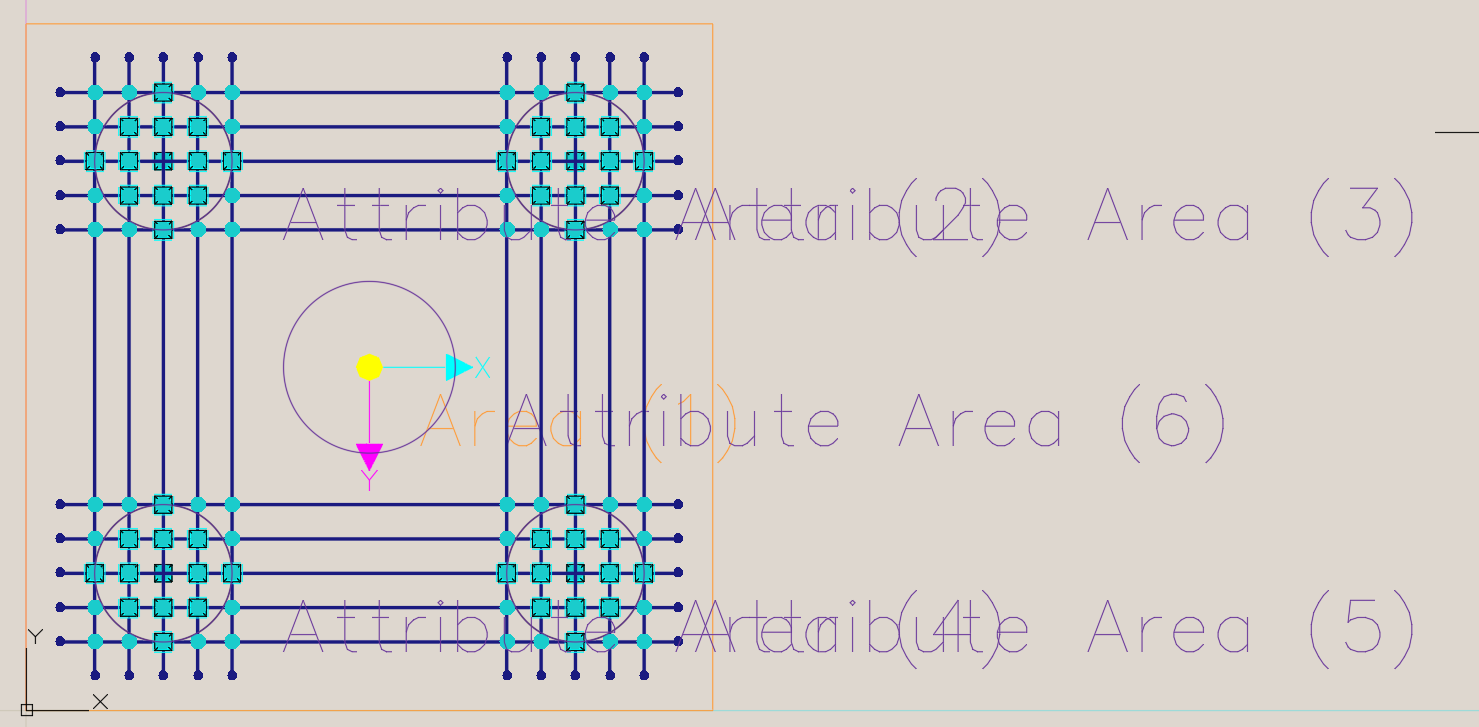
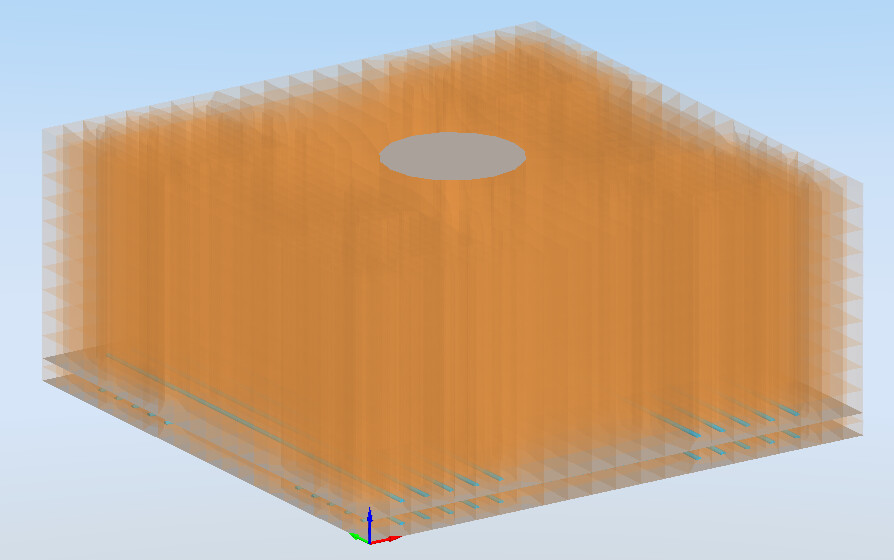
I ‘ve been drawing a plane version of the layout in Sofiplus and afterwards extruded the brics with teddy commands. To be sure reinforcement is connected to bric material, I’ve drawn a dummy reinforcement which is copied to the correct level afterwards and activated by changing the beams cross section. So connection nodes are available.
To construct piles underneath I use attribute areas to extrude downward.
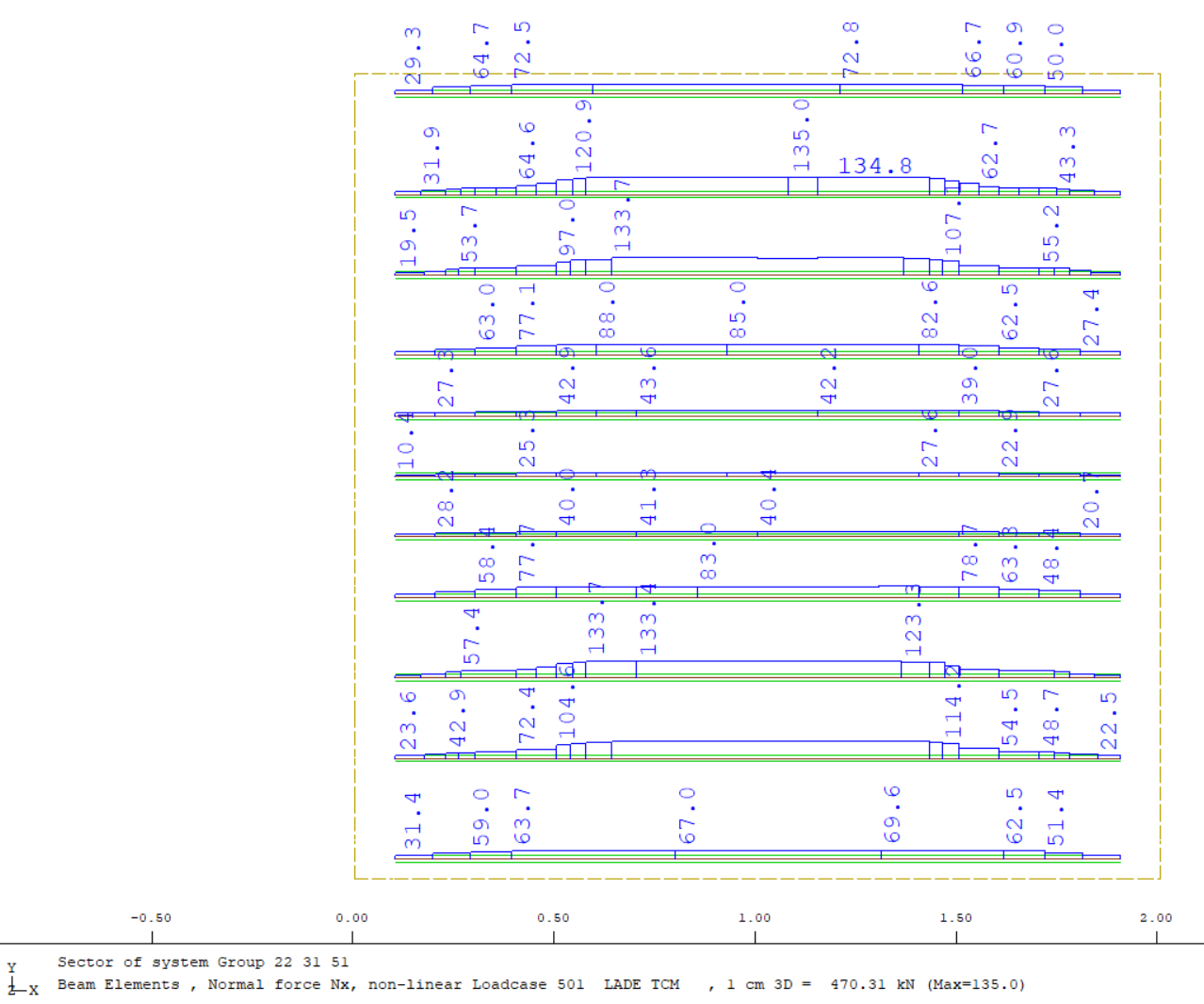
When I use LADE-material to calculate the system it shows reinforcement on top of the piles is more active then reinforcement on middle of block. (You do not find this using a linear calculation)
But it seems impossible to use the same method to create the volume mesh. The dens crossing above the attribute areas makes those ‘corrupt’. They are not exported, so it is not possible to extrude piles the same way.
I recently conducted my own tests on a pile cap using LADE. However, I modeled the piles only as (surface) connected members (and, for testing purposes, also as BRICs). As long as the connection cross-section is over-compressed, the pile reinforcement is of little significance. If this is not the case, the beam variant could still work by modeling the connection reinforcement in the slab discretely and calculating the beams as material-nonlinear (difficult to implement is the slab-connection for inclined piles / inclined connection reinforcement)
However, LADE doesn’t seem very well suited for producing plausible results; at least, I didn’t like mine. Someone else recently conducted a cross-comparison between beam-model, plate calculations and LADE
(https://repositum.tuwien.at/bitstream/20.500.12708/216357/1/Kern%20Angela%20-%202025%20-%20Grossbrueckenfundamente%20mit%20Tiefgruendungen%20-%20Vergleich%20der...pdf)
and arrived at similar, mediocre results regarding LADE.
ATHENA, ANSYS, etc., may offer better approaches here; perhaps a MICROPLANE material model would need to be implemented in ASE for comparable results.